

You're standing in a busy venue in Zona Romántica, the music is up, the bar is moving, and guests are still deciding whether to order another round or head somewhere else for food. That's exactly where bar menu ideas stop being decoration and start becoming a business tool. For an LGBTQ+ venue like The Banana Factory, the menu has to do more than list drinks and dishes, it has to shape pace, identity, and profit while still feeling welcoming to locals, travelers, allies, and late-night regulars.
In a market like Puerto Vallarta, that means building a menu that people can read fast, order from easily, and remember later. It also means matching the reality of extended happy hour, a kitchen that stays open late, and a social calendar that pulls people in for bingo, themed nights, and performances. The strongest menus don't try to be everything. They give guests a clear reason to stay for one more drink, one more plate, and one more event.
Table of Contents
- 1. Happy Hour Cocktail Specials with Progressive Pricing
- 2. Themed Event Calendar with Monthly Marquee Nights
- 3. Late-Night Bar Food Menu with Shareable Appetizers
- 4. Signature Cocktail Program Aligned with Venue Identity
- 5. Weekly Bingo and Community Game Programming
- 6. Live Music and Performance Programming
- 7. Inclusive Group Event Packages
- 8. Digital Engagement, Loyalty App, Social Media and UGC Campaigns
- 9. Seasonal Menu and Tropical Cocktail Rotations
- 10. Accessible Venue Design and Inclusive Service Training
- 10-Item Bar Menu & Program Comparison
- Start Building Your Unforgettable Bar Experience Today
1. Happy Hour Cocktail Specials with Progressive Pricing
The best happy hour menus don't just discount drinks, they shape behavior. The Banana Factory's long 2x1 window already gives the venue a strong base, because guests know they can plan around it and arrive with a purpose. A smarter version layers in featured cocktails so the menu feels active instead of static.
Practical rule: keep the happy hour menu tight, rotate the featured drinks, and make the early part of the window feel like the best value. That helps create urgency without confusing guests who just want a fast decision.
A progressive structure works because it rewards earlier arrivals and keeps the room active as the night unfolds. A bar doesn't need to discount everything equally. It needs a clear ladder, one or two entry-level drinks, a couple of signature options, and a few premium cocktails that feel worth ordering at happy hour rather than waiting until later.
The internal logic is simple. Keep the menu easy to scan, then spotlight the drinks that can carry volume and margin together. Industry guidance in the verified research supports a 20 to 35 item drink list range, plus menu engineering that sorts items by popularity and profitability, which fits a venue like The Banana Factory much better than a sprawling, unfocused beverage list (ULBEC paper). Pair that with an item page that supports time-sensitive promotions, like the bar's own 2-for-1 happy hour, and the menu starts working like a traffic engine.
A useful practice is to train bartenders to recommend a drink and a food add-on together. That matters because guests often become price-sensitive during happy hour, and a quick upsell to fries, wings, or a burger keeps check size from collapsing. Push the specials on social media and in mobile alerts, then use the menu board to make the timing obvious the second someone walks in.
2. Themed Event Calendar with Monthly Marquee Nights
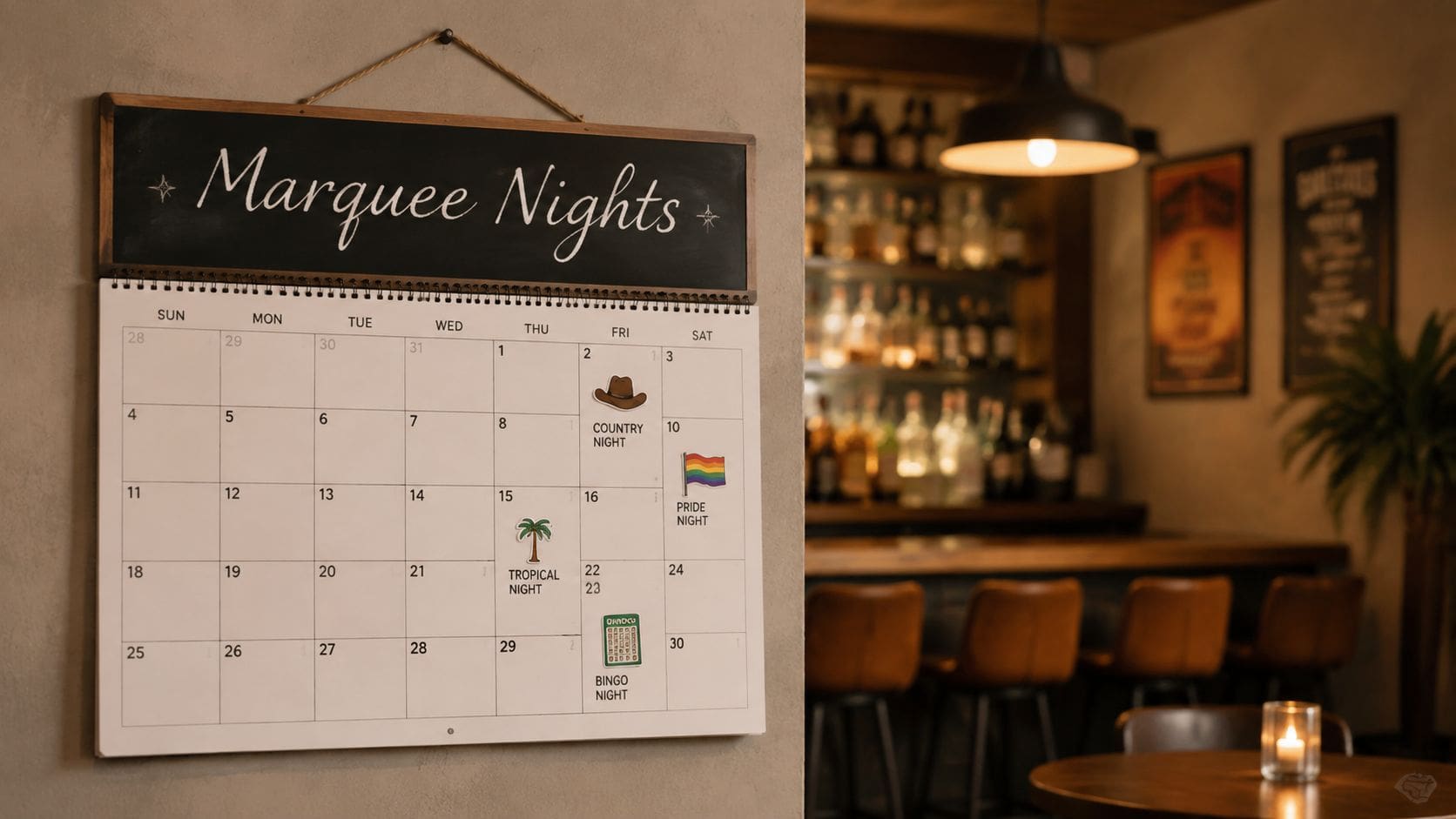
A strong LGBTQ+ bar menu doesn't live on paper alone, it lives inside a calendar. Guests come back when the venue gives them something to anticipate, and predictable recurring events make that easier. For The Banana Factory, that means monthly marquee nights, weekly bingo, and food and drink cues that match each event.
Build the menu around the event, not the other way around
Themed programming works best when guests can read the room immediately. A Cowboy Night, a drag celebration, a tropical beach party, or a bingo Saturday should each have a menu cue that feels intentional. That could be a featured cocktail, a food special, or a simple printed insert that changes just enough to make the night feel distinct.
The value here is consistency. People travel and plan around familiar patterns, especially in nightlife districts where visitors want dependable experiences. A full quarter of events announced ahead of time gives guests a reason to book flights, coordinate outfits, and bring friends. It also helps local regulars create habits around specific nights instead of treating the venue as random stop-in entertainment.
A practical menu strategy is to tie each event to one visual and one edible anchor. Western nights can lean into barbecue-inspired dishes. Bingo night can center on easy-to-share food that doesn't interrupt play. Pride-focused events can use bright, photogenic cocktails that show up well in social posts. That approach keeps operations focused and avoids the mistake of building an elaborate menu item that only makes sense once a year.
The event calendar also gives you a clean marketing system. Announce the quarter, then use Instagram-friendly visuals, performer tags, and event-specific hashtags to keep the schedule circulating. A themed menu doesn't need to be complicated. It needs to be recognizable, easy to execute, and tied to a repeatable social moment. That's what turns a single event into a habit.
3. Late-Night Bar Food Menu with Shareable Appetizers
A bar that serves until 4:00 a.m. needs food that works when people are tired, social, and still drinking. That's where late-night bar food becomes more than comfort food. It becomes retention. The Banana Factory's grill gives it an advantage, because guests don't have to leave the venue to eat after the party gets going.
The most effective late-night menus are built around speed, shareability, and minimal friction. Burgers, loaded fries, wings, and other handheld or fork-friendly dishes do the job because they pair naturally with drinks and work well in groups. The verified food and drink data shows why this matters, U.S. consumers spend about $41.96 on food and $33.15 on drinks on a typical visit in bars and restaurants, while beverage margins are typically 70 to 80% and some bar foods can reach 60 to 65% margins or higher when inventory and prep are optimized (Push Operations guide).
Keep the kitchen menu narrow and recognizable
A late-night food program gets stronger when guests can name the items without hesitation. Think 3 to 5 signature dishes, not a broad all-day restaurant list. One house burger, one loaded fry, one wing style, one shareable appetizer platter, and one or two rotating specials are usually enough to create habit.
A good bar food menu also helps the floor staff sell. Bartenders can point to an item quickly, kitchen tickets stay cleaner, and groups are less likely to spend ten minutes debating choices. That matters in an LGBTQ+ nightlife space, where the energy should stay social instead of turning into a long dinner decision.
Guests usually order food faster when the menu sounds like the venue, not a generic sports bar.
Use your social channels to show the food in nightlife context, not in sterile restaurant framing. A cheeseburger under club lighting tells a better story than a plain product shot. For The Banana Factory, that visual identity helps the grill feel like part of the night, not a separate operation. The result is fewer exits, longer visits, and a menu that supports drinking without relying on alcohol alone.
4. Signature Cocktail Program Aligned with Venue Identity
A signature cocktail menu should sound like the venue belongs to Puerto Vallarta, not like it was copied from a generic lounge. That's especially true for an LGBTQ+ destination where guests look for personality, local connection, and something worth photographing. The Banana Factory can use its cocktail list as brand shorthand.

The first job of a signature drink is clarity. Guests should understand what it is, what it tastes like, and why it belongs on this menu. In tropical markets, that often means bright citrus, agave, fresh herbs, floral notes, and cocktails that look good in daylight and at midnight. The second job is differentiation, because house cocktails tell guests the venue has a point of view.
The verified data supports keeping the list curated, with menu engineering that sorts items by popularity and profitability and a drink selection in the 20 to 35 item range (ULBEC paper, Backbar guide). That doesn't mean every item has to be a signature, but it does mean the house specials should carry identity and margin. A few well-named cocktails can do more than a long list of forgettable classics.
The Banana Factory's specialty drinks are already relevant to this approach, and the bar can build around that foundation with names tied to tropical ingredients, beach culture, or community references (Banana Factory gay bar drinks). If the menu includes a flight of mini cocktails, bartenders can also encourage sampling without making guests commit to one large drink all night. That works especially well for tourists who want to try the venue's style before settling into a favorite.
Storytelling matters here. Bartenders should know why a cocktail exists, what the main ingredient is, and which event it pairs with. That turns a drink order into a small piece of hospitality, and in nightlife, those small moments are what guests remember.
5. Weekly Bingo and Community Game Programming
Bingo works in LGBTQ+ nightlife because it lowers the barrier to entry. Not everyone wants to dance first thing, and not every guest arrives ready for a loud room. A weekly game gives people a reason to sit down, join a group, and stay long enough to order more than one round.
The menu should support that rhythm. Food and drinks need to be easy to order during play, not disruptive. That means bundles, simple appetizers, and drinks that arrive fast. If a group can grab a burger-and-drinks combo before cards start moving, the venue makes the experience smoother for everyone.
The Banana Factory's bingo night concept fits this model well, because recurring game nights build familiarity and give the community a dependable weekly anchor. The strongest bingo nights aren't just about the numbers on the card. They're about the room learning each other's names, cheering for winners, and treating the bar like a social club instead of a temporary stop.
Make the prizes feel fun, not expensive
Prizes don't have to be elaborate to work. A few small rewards early in the game keep attention high, then a larger reward near the end gives the room a reason to stay. Drag hosts or charismatic local personalities make the format feel alive, and team play can turn a table of strangers into a shared audience.
A useful menu move is to create a dedicated bingo bundle. Keep it easy to explain and easy to ring in. Staff can then promote it before the game starts, which reduces ordering friction once the room gets busy. The goal is to keep the focus on the event while still building food and drink sales naturally.
Bingo also helps inclusive venues serve mixed crowds. Travelers, locals, couples, and friend groups can all participate without needing to be expert nightlife customers. That kind of low-pressure social format is valuable, especially in a venue that wants to feel welcoming across ages, gender expressions, and comfort levels.
6. Live Music and Performance Programming
DJs, drag, karaoke, and live bands each do a different job, and the menu should respect that. A dance-heavy DJ night needs fast drinks and limited friction. A drag show needs visible cocktails, clear bar staff flow, and food that can be ordered without missing the performance. Karaoke wants an audience that lingers long enough to sing, clap, and keep ordering.
The smartest operators don't treat performance as decoration. They treat it like traffic design. A strong host, a clear start time, and a menu that matches the energy level of the night all make the room easier to manage. The music licensing walkthrough for events is a useful reminder that entertainment planning has an operational side, not just a vibe side.
Match the format to the guest behavior
A DJ night can support a simpler menu because the goal is movement and speed. Drag nights often benefit from drinks that are easy to brand and easy to photograph. Karaoke works well with hosted specials because guests stay longer and order in between songs. Each format changes how the bar should sell.
The mistake is trying to use one menu structure for everything. That creates bottlenecks. Guests standing near the stage don't want a complicated food list, and late-night dancers don't want to find their way through a long cocktail page. Instead, keep a core menu and then add event-specific highlights that are easy for staff to push.
Promoting performers 2 to 3 weeks ahead of time gives guests time to plan, especially in a tourist market. It also gives the bar a chance to pair the event with a food and drink offer that feels tied to the show. For The Banana Factory, that could mean a pre-show cocktail special, a late-night snack feature, or a karaoke bundle that keeps the room active after the main act ends.
Good entertainment programming creates a reason to stay. Good menu planning makes staying easy.
7. Inclusive Group Event Packages
Group business matters because celebrations bring in people who are already ready to spend together. Bachelorette parties, birthdays, reunion trips, and mixed-friend-group vacations all fit an LGBTQ+ nightlife venue that knows how to host. The menu should make those groups feel like the bar already planned for them.
That means more than bottles and tables. It means structured packages that combine reservations, food, drinks, and entertainment into something staff can deliver without confusion. A group arriving in Puerto Vallarta wants simplicity. If they can understand the offer in one glance, booking becomes easier.
The practical advantage of this approach is margin control. Instead of building a custom experience from scratch every time, the venue can standardize the package and then add upgrades. A smaller group might want a basic table and food tray. A larger group might want themed décor, host support, and a performance tie-in. The format can flex without losing shape.
The private events planning guide supports this kind of structured booking logic, and it fits especially well in a destination market. Tourists often plan farther ahead than locals do, so package pages and brochures should make pricing and inclusions visible early. That helps travelers compare options without sending three follow-up emails just to understand the basics.
Build the package around the kind of night the group wants
Some groups want a dinner-forward celebration. Others want drinks, games, and dancing. A strong package can support either version, but the venue has to name the difference clearly. Otherwise the staff ends up improvising on the fly, which hurts consistency and service speed.
For The Banana Factory, group packages should feel aligned with the venue's inclusive identity. That means positioning them for LGBTQ+ guests and allies without making them feel niche or exclusionary. The point is to create a polished, easy booking path for people who already know they want a shared night out.
8. Digital Engagement, Loyalty App, Social Media and UGC Campaigns
A modern bar menu has a digital shadow. Guests discover a venue on Instagram, check specials in a story, and decide whether to come back based on how easy it is to remember the offer. For a nightlife venue in a tourism-heavy district, that means the menu has to show up online as clearly as it does in the room.
Loyalty programs are useful when they stay simple. The verified data notes that app-based loyalty can drive repeat behavior in other hospitality settings, and the broader lesson for bars is straightforward, make it easy to join, easy to understand, and easy to use. That works especially well when the reward ties to something guests already want, like a happy hour return visit or a game night perk (Toki loyalty guide).
Social media is the other half of the system. A bar menu with clean visuals, branded cocktail names, and event-specific hashtags gives guests something to post without extra effort. If the drink looks good and the event feels social, user-generated content starts doing the marketing for you.
Keep the program simple enough that a first-time visitor understands it in under a minute.
A strong digital strategy also respects attention fatigue. Two to three push notifications a week is usually more than enough for a nightlife audience if the content is useful. People don't want noise. They want a quick reminder that tonight's special, bingo, or performance is worth leaving home for.
The Banana Factory can use digital channels to connect the menu with the community. A loyalty sign-up can highlight happy hour. A post can feature the signature cocktail of the week. A reel can show the bingo crowd or the late-night burger. That consistency turns a menu into an ongoing conversation instead of a static list.
9. Seasonal Menu and Tropical Cocktail Rotations
Puerto Vallarta already gives you a seasonal story, so the menu should use it. The climate, tourism cycles, and cultural calendar all create reasons to update what's on offer. A venue that changes with the season feels alive. A venue that never changes starts to feel like it's on autopilot.
Seasonal rotation doesn't need to be dramatic. It needs to be intentional. A couple of new ingredients, one or two limited-time cocktails, and a food special that fits the weather can make the menu feel current without forcing the kitchen into chaos. In a tropical bar, that might mean lighter drinks and seafood-forward items during warmer stretches, then richer appetizers or spice-driven cocktails when the crowd wants something different.
The verified data notes that seasonal positioning can matter materially, and the most useful takeaway is not a percentage, it's the principle. Guests respond when the menu feels connected to the moment instead of frozen in time. For an LGBTQ+ venue, that can also mean aligning specials with Pride, holiday tourism, and major event weekends so the menu supports the energy already in the room.
Announce the rotation before it starts
Guests plan around anticipation. If a new cocktail or food special appears without warning, only the people already inside notice it. When The Banana Factory announces the next seasonal menu in advance through email, social, and in-venue messaging, the menu becomes part of the reason to return.
A tasting event works especially well here. Let people try the seasonal cocktails during happy hour, then give them a reason to come back for the version they liked best. That's a cleaner path than waiting until the menu launch to explain everything from scratch.
The best seasonal menus also give staff a story to tell. Local sourcing, tropical ingredients, and event-tied specials make the venue feel rooted in Puerto Vallarta instead of generic to any beach town. That authenticity matters in an LGBTQ+ destination where visitors want both celebration and a sense of place.
10. Accessible Venue Design and Inclusive Service Training
A venue can't call itself welcoming if people can't move easily through it or don't feel respected by the staff. Accessibility isn't a side feature. It's part of the guest experience, and for an LGBTQ+ bar, it should be visible in both the room and the menu.
That starts with the basics. Wheelchair access, usable restrooms, wide pathways, and clear signage are practical necessities. So are service habits that respect pronouns, different gender identities, body types, and guests who may need a quieter corner away from loud music. The menu plays a role too, because easy-to-read layouts and clear item descriptions reduce friction for everyone.
A formal accessibility audit is worth the effort, especially if the venue wants to identify what needs fixing instead of guessing. Staff training should happen on a regular cycle, not once and forgotten. If the team knows how to welcome a mixed group confidently, the whole room feels more relaxed.
There's also a business case for being explicit. When a website or Google Business profile clearly states accessibility features and inclusive policies, guests don't have to ask basic questions before deciding to visit. That's especially helpful for travelers and first-time visitors who are already navigating a new city. A venue that answers those questions up front makes itself easier to choose.
The strongest LGBTQ+ nightlife spaces don't just tolerate difference, they design for it. That includes low-sensory areas, staff who know how to de-escalate awkward moments, and menu choices that work for different budgets and social styles. Those details matter because a memorable night usually starts with feeling safe enough to relax.
10-Item Bar Menu & Program Comparison
| Item | 🔄 Implementation Complexity | ⚡ Resource Requirements | 📊 Expected Outcomes | Ideal Use Cases | ⭐ Key Advantages | 💡 Tips |
|---|---|---|---|---|---|---|
| Happy Hour Cocktail Specials with Progressive Pricing | Medium, pricing tiers, rotating features, inventory controls | Moderate, POS config, staff training, marketing; high drink volume | Increased daytime traffic and predictable volume; lower per-drink margin | Slow-afternoon periods, brunch/weekend mornings, tourist afternoons | ⭐ Builds loyalty and differentiates with extended hours | 💡 Feature 2–3 weekly signature cocktails; push time-sensitive alerts; train staff to upsell food |
| Themed Event Calendar with Monthly Marquee Nights | High, event planning, production, consistent execution | High, talent, staging, marketing, recurring setup costs | Strong repeat visitation, social buzz, merchandise & sponsorship opportunities | Community building, weekend marquee nights, tourism peaks | ⭐ Predictability that drives word-of-mouth and identity | 💡 Announce quarterly calendar; use event hashtags; partner with regular performers |
| Late-Night Bar Food Menu with Shareable Appetizers | Medium, menu design, kitchen workflows, late-night operations | Moderate–High, overnight kitchen staff, bulk prep, inventory control | Longer dwell time, higher check sizes, justification for late hours | Late-night service (10pm–4am), group visits, post-club crowds | ⭐ Increases per-customer spend and venue stickiness | 💡 Create 3–5 signature loaded dishes; offer half-portions; track sales by time block |
| Signature Cocktail Program Aligned with Venue Identity | Medium, recipe dev, documentation, bartender training | Moderate, premium ingredients, skilled staff, seasonal stock | Higher margins, shareable content, brand differentiation | Non-happy-hour premium sales, social media-driven tourism | ⭐ Drives 40–50% higher margins and strong social shareability | 💡 Name drinks locally; offer flights; train bartenders to tell cocktail stories |
| Weekly Bingo and Community Game Programming | Low–Medium, schedule, caller, prize logistics | Low–Moderate, caller/staff, AV, prizes, simple setup | Consistent weekly attendance; broader demographics; increased food/drink spend | Saturday community nights, fundraising, inclusive programming | ⭐ Attracts diverse repeat audiences and creates social bonding | 💡 Use tiered prizes; recruit local personalities as callers; bundle food/drink + card deals |
| Live Music and Performance Programming (DJs, Drag, Live Bands) | High, booking, licensing, production, scheduling | High, artist fees, sound/lighting, music licensing, staffing | Justifies cover charges, generates media/UGC, drives peak attendance | Dance nights, marquee events, tourist-driven evenings | ⭐ High attraction power and premium revenue potential | 💡 Build relationships with reliable performers; promote 2–3 weeks ahead |
| Inclusive Group Event Packages (Bachelor/Bachelorette, Birthdays) | Medium, package design, contracts, deposit management | Moderate, event coordinator, themed inventory, reserved space | Advance revenue, large ticket spend, strong social media exposure | Destination groups, celebrations, pre-booked tourism groups | ⭐ Commands 30–50% premium pricing and predictable cash flow | 💡 Create a clear landing page/brochure; offer early-bird discounts; assign an event coordinator |
| Digital Engagement: Loyalty App, Social Media & UGC Campaigns | High, app dev, POS integration, data/privacy systems | High, technology build/hosting, content production, moderation | Higher visit frequency, zero-party data, amplified organic reach | Ongoing retention, event promotion, cross-channel marketing | ⭐ Significantly increases customer lifetime value and personalization | 💡 Launch with simple rewards; promote enrollment during busy times; limit push notifications |
| Seasonal Menu and Tropical Cocktail Rotations | Medium, R&D, supplier coordination, training per season | Moderate, seasonal ingredients, marketing, staff retraining | Urgency-driven repeat visits, seasonal sales uplift, social content | Tourism seasons (Dec–Apr, summer), holidays, Pride Month | ⭐ Differentiates via local/tropical ingredients and drives repeat visits | 💡 Announce menus 2–3 weeks early; test 1–2 new ingredients per season; partner with local suppliers |
| Accessible Venue Design and Inclusive Service Training | High, physical upgrades, policy development, sustained training | High, capital for ADA improvements, recurring training, advisory fees | Expanded addressable market, reduced legal risk, stronger community reputation | Long-term brand building, safety-focused audiences, inclusive mission | ⭐ Genuine inclusivity, stronger loyalty, and compliance benefits | 💡 Conduct third-party accessibility audit; mandate recurring cultural competency training |
Start Building Your Unforgettable Bar Experience Today
The strongest bar menu ideas are never just about what's on the page. They connect pricing, food, drinks, events, and inclusivity into one system that guests can understand fast and enjoy all night. For The Banana Factory, that means using a curated drink list, a late-night grill, weekly community programming, and clear accessibility practices to create a venue that feels organized, welcoming, and worth returning to.
The advantage is not novelty for its own sake. It's consistency with enough creative change to keep people interested. A good signature cocktail program gives regulars something to order without thinking. A bingo night or themed event gives travelers a reason to plan ahead. A strong food menu keeps the night going after the second round. Put those pieces together, and the venue becomes more than a stop on a nightlife crawl.
If you're building for Puerto Vallarta's Zona Romántica, keep the menu tied to the crowd you want in the room. Make it easy for LGBTQ+ guests, allies, locals, and visitors to understand what the night offers before they arrive. That clarity sells, and it also makes the space feel more genuine once people walk through the door.
For venues that want a bar, grill, and event calendar working together in one place, The Banana Factory already points in that direction. Review the offers, study the specials, and see how the format fits your next night out.
If you're ready for an LGBTQ+ nightlife spot in Zona Romántica that blends happy hour, late-night food, and recurring events, visit The Banana Factory and plan your next night around a menu that's built for social energy and easy decisions. It's a practical way to see how bar, grill, and community programming can work together in one venue.
